The Canyon Nature Park: Space To Slow Down
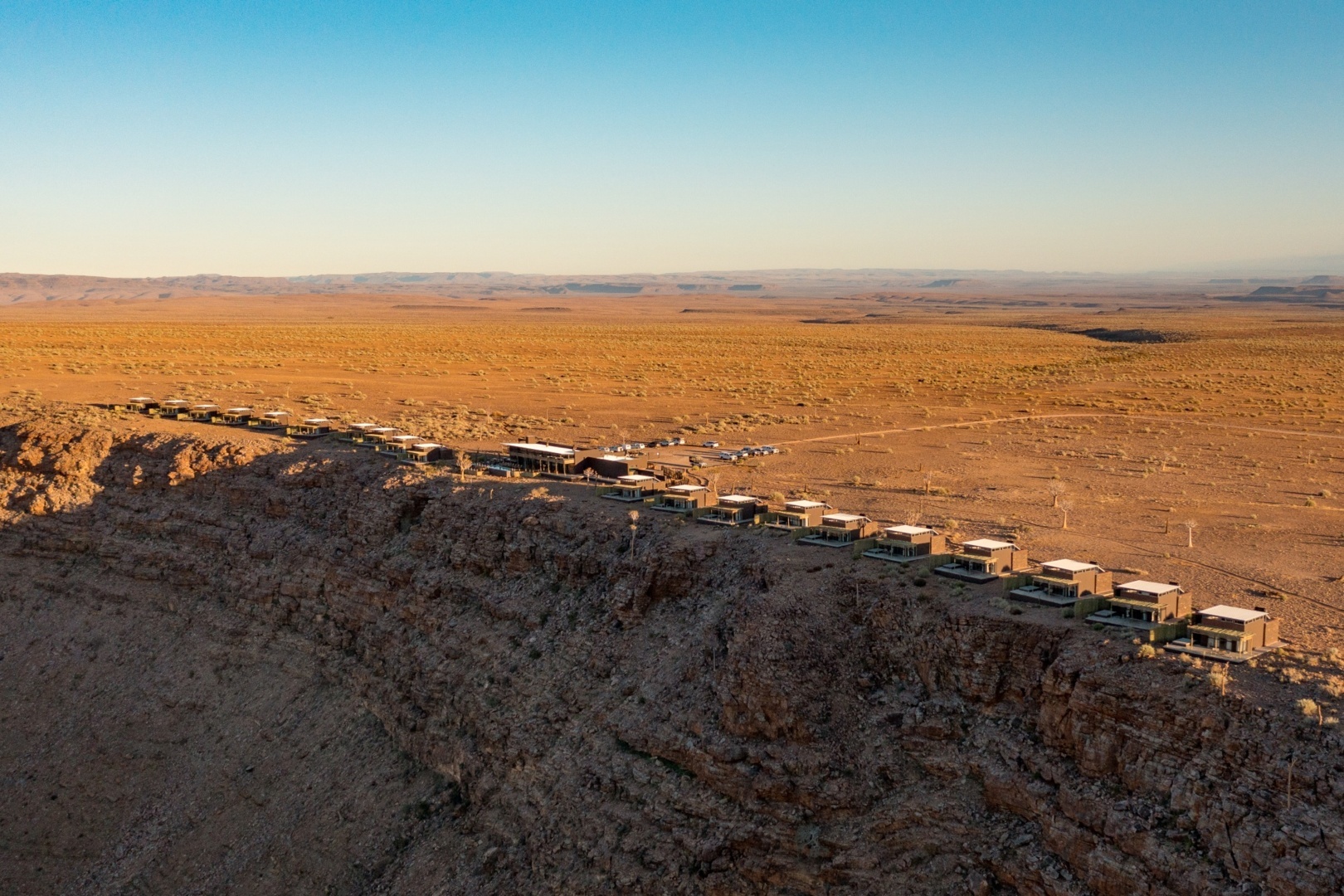
Welcome to Canyon Nature Park, a 45,000‑hectare sanctuary of silence, space and slow travel on the western rim of the Fish River Canyon. Flat‑topped mountains, open plains and a maze of side ravines tumble down to Namibia’s longest river, inviting you to linger rather than rush through.
From Fish River Lodge you can settle into the landscape with warm Namibian hospitality, unhurried service and uninterrupted views from sunrise to stars. Instead of ticking off sights, you wake up to cliff‑edge light, wander along the rim, and return to watch the canyon change colour at its own pace.
This vast, untamed corner of southern Namibia is also a natural refuge for the iconic Kokerboom (Aloe dichotoma) and more than 1,600 other plant species, alongside desert‑adapted wildlife. Washes and side ravines carve deep furrows into the canyon walls, adding drama to every viewpoint and hike.
Protected Borderlands and Conservation Travel
Canyon Nature Park shares borders with the /Ai-/Ais-Richtersveld Transfrontier Park and neighbouring private farms that have stepped away from commercial agriculture. Together they form one of Namibia’s most important conservation landscapes and its first transboundary conservation collaboration. By choosing to stay longer at Fish River Lodge, you support a broad based approach to conservation, sustainable natural resource management and local socio economic development. This is slow travel with purpose: fewer stops, deeper impact.
Travel Advice for a Slower Journey
The closest towns are Keetmanshoop, Rosh Pinah and Aus; this is where you should fill up with fuel and stock up before turning off onto gravel. Distances in southern Namibia are vast and part of the experience, so allow generous driving time and plan at least a two‑ or three‑night stay at the lodge to truly unwind.
Along the way you can explore quiver tree forests, remote desert vistas and historic towns—perfect stops on a slow road trip through Namibia’s south. Research your route in advance or contact us for advice so your journey to Fish River Lodge becomes part of your canyon story, not just a transfer.
Eco-Friendly By Design
Fish River Lodge is committed to minimising its footprint in this fragile, arid ecosystem. As an active participant in the Namibian Eco Awards Programme, we regularly reassess our operations to reduce water use, energy consumption and waste.
Sustainability guides every decision, from solar‑powered energy and water‑saving measures to sensitive building practices that blend into the rocky rim. To learn more about the Eco Awards Programme and Namibia’s leading eco‑lodges, visit www.ecoawards-namibia.org.
Local Flora, Fauna and The Luxury of Silence
This southern corner of Namibia remains largely undeveloped, giving guests a rare sense of undiscovered wilderness and true silence. Rain falls mainly in summer, but occasional winter showers transform the washes and rock pools into lifelines for plants and animals.
Canyon Nature Park is home to over 100 endemic succulents and some 1,600 additional plant species, including ancient Kokerboom trees recorded at more than 300 years old. Desert‑adapted wildlife includes Hartmann’s mountain zebra, springbok, kudu, oryx, steenbok, klipspringer, chacma baboon and elusive predators such as leopard, caracal, brown hyena, cheetah and honey badger. Permanent rock pools along the Fish River shelter Small‑ and Largemouth yellowfish, sharptooth catfish and water monitors, even when the river is not flowing.
Birders can slow down on the rim and tick more than 240 bird species, from Black Eagles and Fish Eagles riding the thermals to pelicans, herons and African Black Ducks along the water. Bring your bird atlas, binoculars and time—this is a place to watch the canyon’s daily rhythms unfold.
Geology: Reading 350 Million Years of Earth's Story
Few environments reveal the earth’s layers as dramatically as the Fish River Canyon. The upper canyon, carved into hard gneiss bedrock, began as a tectonic trough formed when plates shifted some 350 million years ago. Around 120 million years ago, as Gondwana broke apart and Africa rose, the gradient of the Fish River increased and began to cut the deeper, winding ravines you see today.
Dolomite and granite walls tower above the river, which snakes through the depths after heavy summer rains. Within minutes, dry washes can become torrents and temporary waterfalls, continuing the eternal process of erosion.
Our qualified guides lead small‑group excursions into the 550‑metre‑deep canyon, sharing geological insights and viewpoints that reward those who take the time to explore on foot. These guided hikes are ideal for slow travellers who want to understand, not just photograph, the landscape.
Archaeology: Traces of Ancient Journeys
Long before roads and lodges, nomadic San hunter‑gatherers moved through this region, leaving their stories etched into rock. Rock art and engravings across southern Namibia depict rituals, wildlife and their relationship with the land; some panels south of the Fish River Canyon have been dated to between 23,000 and 27,000 B.C.
Closer to our own time, abandoned stone lammerhuisies (shepherds’ huts), cattle kraals and farmhouses tell of the tough realities of farming in the 1950s in this harsh environment. When visiting archaeological sites within Canyon Nature Park, guests are asked to follow our simple guidelines so that these fragile traces remain intact for future generations of travellers.
A Living Landscape for Research
Canyon Nature Park partners with local and international research institutions to deepen understanding of this unique environment. Students from the Namibia University of Science and Technology (NUST) have studied Aloe dichotoma populations and water consumption at the lodge, helping to refine our conservation and sustainability practices.
A pioneering camera‑trap project is currently rolling out 45 live cameras across a 300‑kilometre radius, already documenting 17 mammal species—including cheetah—in conditions where many assumed life to be scarce. Every sighting is logged in an event book and added to a national database, turning each guest’s stay into a small contribution to Namibian conservation science.
Arriving by Air: A Different Kind of View
For guests who prefer to spend less time driving and more time on the rim, flying from Windhoek to Fish River Lodge is a scenic, time‑saving alternative to the 7‑hour, 764‑kilometre road journey. From the air you see the sinuous Fish River, its side ravines and gullies, and the sheer scale of the canyon before you even check in.
Please direct all flight enquiries to Journeys Namibia, our trusted reservations partner.
The Surrounding South: Namibia's Quietest Corner
Southern Namibia is one of the least populated regions in the country, dominated by vast parks, private reserves and protected areas with minimal human habitation. To the west lies the Namib, the world’s oldest desert, with shifting coastal dunes and ancient dry riverbeds that rarely carry surface water.
In the southeast, the Kalahari merges with the Namib, creating a dry, hot landscape that appears empty at first glance. Look closer and you’ll find a surprising diversity of desert‑adapted animals, from small reptiles and insects to larger mammals, all perfectly evolved for life in this extreme environment.
Fish River Lodge is your slow‑travel base in this wild south—stay longer, drive less, and let the canyon and its quiet surroundings work their way into your journey.
Journeys Namibia Portfolio